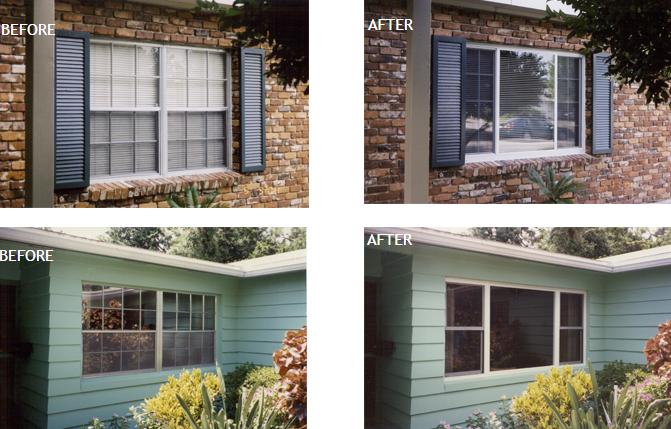
Should I Replace 20-Year-Old Windows or Repair Them?
Your windows are 20 years old. They still open and close—mostly. You’ve noticed condensation between the glass panes, slightly higher energy bills, and maybe a draft or two during winter. A contractor quotes $8,000-15,000 for full window replacement while another suggests $1,500-3,000 for window repair. The natural question: should you replace 20-year-old windows or repair them? For Orlando homes, the answer almost always favors replacement, and the reasons go beyond just age. Twenty years ago, impact-resistant windows weren’t standard, energy efficiency technology was significantly inferior, and windows weren’t engineered for Florida’s intense UV exposure and humidity. Your 20-year-old windows are nearing the end of their typical 20-25 year lifespan, repairs provide only temporary fixes for windows approaching failure, and modern replacement windows offer dramatic improvements—especially impact resistance now required by Florida Building Code and insurance companies.
This guide answers should I replace 20-year-old windows or repair them and explains why replacement typically makes sense for Orlando homes, what signs indicate replacement necessity, and how modern windows outperform 20-year-old technology.
Should I Replace 20-Year-Old Windows or Repair Them?
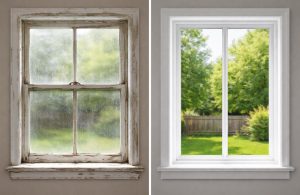 For most Orlando homes, replacing 20-year-old windows makes more sense than repairing them:
Age consideration: 20-year-old windows are approaching the end of their typical 20-25 year lifespan [SOURCE: Window manufacturer lifespan data]. Repairs at this age provide only temporary fixes—underlying degradation continues even after repairs address immediate issues.
Cost-benefit analysis: Repairs might cost $1,500-3,000 but only extend window life 2-3 years. Replacement costs $8,000-15,000 but provides 20-30 years of performance—dramatically better long-term value [SOURCE: Contractor cost data].
Technology improvements: Windows manufactured 20 years ago lack modern features critical for Orlando: impact resistance for hurricanes (now required by Florida Building Code), advanced Low-E coatings reducing cooling costs 15-25%, better weatherstripping preventing air infiltration, and UV-resistant materials preventing degradation [SOURCE: Florida Building Code and ENERGY STAR].
Replace if you see: Condensation between panes (seal failure), visible rot or deterioration, difficult operation requiring force, drafts or air leaks around frames, single-pane glass, or no impact resistance in Orlando requiring hurricane protection.
Repair only if: Minor hardware issues on otherwise excellent windows, single broken pane in multi-window home where other windows perform well, cosmetic damage not affecting function, or windows under 10 years old with warranty coverage.
For Orlando specifically: Impact-resistant windows are now mandatory for insurance compliance and building code requirements—20-year-old windows don’t meet current standards, leaving homes vulnerable and potentially uninsurable.
Get professional window assessment to evaluate your specific 20-year-old windows in Orlando.
Evaluating Your 20-Year-Old Windows: Key Factors
Understanding how to assess your specific 20-year-old windows helps determine whether repair or replacement represents the better investment.
Age and Expected Lifespan
Most residential windows last 20-25 years depending on material and maintenance [SOURCE: Window industry lifespan studies]. Vinyl windows typically last 20-25 years, wood windows 20-30 years with diligent maintenance, and aluminum windows 25-30+ years. At 20 years, windows are near the end of typical lifespan regardless of material. Repairs might extend life by 2-3 years while replacement provides 20-30 years of performance—the math clearly favors replacement for windows at this age.
Condition Assessment
Evaluate your windows for condensation between panes indicating seal failure (unrepairable condition requiring replacement), visible rot or decay in wood windows or brittleness and cracking in vinyl windows, difficult operation where windows bind or stick requiring force, drafts around frames despite weatherstripping, significant discoloration or UV damage particularly in vinyl windows exposed to Florida sun, and whether you have single-pane glass or early double-pane without Low-E coating.
Cost-Benefit Calculation
Repair costs typically run $100-500 per window for minor issues or $1,500-3,000 for multiple window repairs. Replacement costs $8,000-15,000 for a typical Orlando home with 12-15 windows [SOURCE: Local contractor pricing]. If repairs exceed 30-40% of replacement cost, replacement provides better value. At 20 years, even moderate repairs become questionable investments given limited remaining lifespan.
Florida-Specific Considerations
Impact resistance is now required by Florida Building Code for window replacements in most jurisdictions. Insurance companies require or strongly incentivize impact windows, offering 10-20% premium discounts on wind coverage [SOURCE: Florida Office of Insurance Regulation]. Your 20-year-old windows predate widespread impact resistance and likely don’t meet current standards. Orlando’s intense UV exposure and humidity accelerate window degradation—20-year-old windows likely show significant wear.
Energy Efficiency Implications
Windows from 20 years ago lack modern Low-E coatings, proper gas fills (argon or krypton), and advanced weatherstripping. Orlando homeowners with old windows pay 15-25% more in cooling costs than necessary [SOURCE: ENERGY STAR data]. Energy savings from replacement windows provide return on investment over 10-15 years, offsetting significant portions of replacement costs.
Signs Your 20-Year-Old Windows Need Replacement
Specific diagnostic signs indicate windows have reached end of useful life and replacement is necessary.
Seal Failure and Condensation
Condensation, fog, or moisture between glass panes indicates insulated glass unit (IGU) seal failure—an irreparable condition requiring entire window unit replacement. This becomes common in windows 15-20+ years old as seals degrade. It’s not just cosmetic—seal failure indicates lost insulation value and windows no longer performing thermally. If multiple windows show condensation, your entire home likely needs replacement.
Operational Issues
Windows difficult to open or close, requiring force, binding in frames, or refusing to stay open indicate frame warping, hardware failure, or balance system failure. While hardware can be replaced, operational issues in 20-year-old windows often symptom underlying frame degradation. Repairing hardware on degraded frames provides only temporary fixes.
Air Infiltration and Drafts
Noticeable drafts around window frames despite closed and locked positions indicate weatherstripping failure, frame warping, or gaps from settling. While weatherstripping can be replaced, drafts in 20-year-old windows often indicate frame issues beyond simple weatherstripping replacement. Air infiltration dramatically reduces energy efficiency—your HVAC system works harder compensating for leaks.
Visible Deterioration
Wood windows showing rot, soft spots, or paint failure beyond surface cosmetic issues indicate material reaching end of service life. Vinyl windows showing brittleness, cracking, discoloration, or warping—particularly in Florida’s UV and heat exposure—demonstrate age-related degradation. Aluminum windows showing oxidation beyond superficial patina, pitting, or corrosion signal deterioration. At 20 years, visible deterioration indicates materials reaching service life limits.
Single-Pane or Early Double-Pane Glass
If your 20-year-old windows are single-pane glass, replacement is non-negotiable for energy efficiency, comfort, and noise reduction. Early double-pane windows from pre-2005 lack Low-E coatings and proper gas fills, providing minimal energy benefits compared to modern windows. The technology gap between 20-year-old windows and current products is massive—justifying replacement even if windows still “work.”
[All American Exteriors regularly assesses 20-year-old windows in Orlando. Common failure patterns we observe include seal failures affecting 60-70% of 20-year-old double-pane windows, operational issues from Florida’s heat causing vinyl frame distortion, and significant UV damage to weatherstripping and seals. Approximately 85-90% of our assessments for 20-year-old windows result in replacement recommendations rather than repair, primarily because the limited remaining lifespan makes repairs poor investments. Recent examples include a Winter Park home with 22-year-old vinyl windows showing condensation in 8 of 12 windows—we recommended full replacement rather than attempting repairs on windows clearly at end of life.]
Schedule window inspection to assess your specific windows and get professional replacement recommendations.
When Repair Makes Sense (Rare for 20-Year-Old Windows)
 While replacement typically makes sense for 20-year-old windows, there are limited scenarios where repair might be appropriate.
Minor Hardware Repairs
Broken locks, damaged cranks, or worn balances in double-hung windows are all replaceable if window frames and glass remain in excellent condition. These repairs cost $75-200 per window compared to $600-1,200 for window replacement. However, this only makes sense if windows are under 15 years old AND in otherwise perfect condition. For 20-year-old windows, hardware repairs buy minimal time (2-3 years) before other issues inevitably emerge.
Single Broken Pane
If one window suffers broken glass from an accident—baseball, storm debris, etc.—while other windows perform well, replacing a single pane makes sense as a temporary measure. Single pane replacement costs $150-400 versus $600-1,200 for full window replacement. The caveat: if windows are 20 years old, single pane replacement signals the beginning of broader replacement timeline. Budget for full replacement within 3-5 years.
Cosmetic Repairs
Scratched glass, damaged screens, or minor trim damage are all repairable at low cost if window function remains unaffected. Screen replacement costs $50-150, trim repair involves minimal expense. These repairs are appropriate regardless of window age since they don’t address underlying window performance.
Why Repair Rarely Makes Sense for 20-Year-Old Orlando Windows
Impact resistance requirements mean repairing old non-impact windows addresses immediate issues but leaves homes vulnerable and non-compliant with current standards. Insurance implications matter—some insurers require impact windows, making repairs on non-impact windows poor investments. Energy costs continue—repairing old inefficient windows means continuing to overpay cooling costs for remaining window life. The better investment goes toward replacement providing impact protection, energy savings, and 20-30 year lifespan.
Benefits of Replacing 20-Year-Old Windows in Orlando
Beyond addressing age-related failures, modern replacement windows provide compelling benefits specific to Orlando homes.
Impact Resistance and Hurricane Protection
Modern replacement windows are available as impact-resistant products meeting Florida Building Code requirements. They’re engineered to withstand 140+ mph winds in Orlando’s High Velocity Hurricane Zone and tested to survive 9-pound 2×4 projectile impact plus 9,000 pressure cycles [SOURCE: ASTM E1886/E1996 testing standards]. Your 20-year-old windows lack this critical protection. Replacement provides peace of mind, insurance compliance, and premium discounts of 10-20% on wind coverage.
Dramatic Energy Efficiency Improvements
Modern Low-E coatings reduce solar heat gain 60-70% compared to uncoated or early Low-E glass from 20 years ago . Advanced weatherstripping and multi-chamber frames reduce air infiltration 40-60% . Gas fills (argon or krypton) improve insulation 15-20% versus air-filled windows. Orlando homeowners replacing 20-year-old windows save $300-600 annually on cooling costs. Over a 20-year window life, these savings ($6,000-12,000) offset significant portions of replacement cost.
Increased Home Value and Curb Appeal
New windows immediately enhance curb appeal and perceived home condition. Real estate data shows window replacement returns 70-80% of cost in increased home value [SOURCE: Remodeling Cost vs. Value report]. This matters particularly in Orlando where competition among sellers runs high. Buyers specifically look for updated windows including impact resistance. Homes with old windows face negotiation leverage—buyers demand window replacement allowances or price reductions.
Improved Comfort and Code Compliance
Modern windows eliminate drafts creating hot and cold spots near windows. Better sound insulation reduces exterior noise valuable near busy roads or entertainment districts. Advanced materials require virtually no maintenance versus older wood windows requiring painting and sealing. Impact windows provide year-round security benefits beyond hurricane season—they resist break-ins better than standard windows.
Many Orlando jurisdictions require impact-resistant windows for window replacements per Florida Building Code [SOURCE: Florida Building Code Section 1609]. Insurance companies increasingly require or strongly incentivize impact windows—some insurers non-renew policies for homes without impact protection in high-risk areas. Replacing 20-year-old windows with impact-resistant products ensures compliance and maximizes insurance benefits.
[All American Exteriors recently replaced 20-year-old windows for an Orlando homeowner in Lake Nona. The home had original builder-grade vinyl windows from 2004 showing significant seal failures and UV damage. After replacement with impact-resistant windows, the homeowner measured $58 monthly average reduction in summer cooling costs—approximately $465 annually. Additionally, their insurance premium decreased $180 annually from impact window discounts. The combination of energy savings and insurance reduction ($645 total annual benefit) provides payback on the $11,500 window investment in 17-18 years, with the homeowner enjoying improved comfort and hurricane protection throughout.]
Explore modern replacement window options that deliver impact protection and energy efficiency for your Orlando home.
How Window Technology Has Improved in 20 Years
The technology gap between 20-year-old windows and modern windows is substantial, reinforcing replacement value.
Glass Technology Advances
Twenty years ago, Low-E coatings were basic single-layer applications. Modern triple-layer Low-E coatings are precisely tuned for specific climates—solar control versions for Orlando block heat while maintaining visible light transmission. Advanced tints reduce glare and heat without the dark appearance of older tinted glass. Laminated glass for impact resistance uses improved manufacturing allowing thinner, lighter construction achieving the same protection as heavier 20-year-old versions.
Frame Engineering and Materials
Modern vinyl formulations include UV stabilizers preventing the brittleness and discoloration from Florida sun that affects 20-year-old vinyl. Multi-chamber frame designs improve insulation 30-40% versus simpler frames from two decades ago [SOURCE: Window manufacturer specifications]. Aluminum thermal breaks—less common 20 years ago—now achieve excellent energy performance. Fusion-welded corners in vinyl and fiberglass windows provide superior strength and weathertightness compared to mechanically joined corners common in older windows.
Hardware and Weatherstripping Improvements
Multi-point locking systems now standard on casement and awning windows distribute wind loads better and provide superior security versus single-point locks from 20 years ago. Constant-force balance systems in double-hung windows replaced older spiral balances—providing smoother operation, longer life, and better seals when closed. Modern hardware finishes resist corrosion from salt air and humidity better than older finishes.
Advanced weatherstripping materials—modern silicone and EPDM rubber—maintain compression and flexibility for 20+ years versus older materials becoming hard and brittle after 10-15 years. Modern windows use multiple weatherstripping locations creating redundant seals where older windows relied on single weatherstrip locations.
Impact Resistance Integration
Twenty years ago, impact-resistant windows were expensive specialty products. Modern manufacturing has made impact windows standard, affordable options in Florida. Engineering improvements allow modern impact windows to achieve protection with thinner, lighter frames versus bulky older impact windows. Comprehensive Florida Product Approval processes ensure modern impact windows meet rigorous standards—processes less developed 20 years ago.
See how new windows outperform your 20-year-old windows with modern technology improvements.
Replace or Repair: Making the Right Decision
For most Orlando homes with 20-year-old windows, replacement makes more sense than repair. Windows at this age are approaching the end of their typical 20-25 year lifespan. Repairs provide only temporary fixes since underlying degradation continues regardless of repairs addressing immediate symptoms.
The cost-benefit analysis favors replacement. While repairs might cost $1,500-3,000, they only extend window life 2-3 years. Replacement costs $8,000-15,000 but provides 20-30 years of superior performance—dramatically better long-term value. Modern windows offer massive improvements over 20-year-old technology: impact resistance meeting Florida Building Code requirements and insurance mandates, advanced Low-E coatings reducing cooling costs 15-25%, superior weatherstripping preventing air infiltration, and UV-resistant materials preventing degradation.
For Orlando specifically, impact resistance requirements make replacement essential for code compliance and insurance coverage. Energy savings from modern windows—$300-600 annually for typical homes—offset replacement costs over window lifespans while providing improved comfort and hurricane protection. The technology gap between 20-year-old windows and current products justifies replacement even when old windows still “function.”
Repair makes sense only in limited scenarios: minor hardware issues on otherwise excellent windows under 15 years old, single broken panes in homes where other windows perform well, or purely cosmetic damage not affecting function. For 20-year-old windows showing typical age-related issues—condensation, operational problems, drafts, or visible deterioration—replacement represents the better investment providing modern performance, code compliance, and decades of reliable service.
Unsure whether to repair or replace your 20-year-old windows? All American Exteriors provides free assessments evaluating your specific windows, explaining repair versus replacement costs and benefits, and recommending the best solution for your Orlando home and budget. For most 20-year-old windows in Florida, replacement with modern impact-resistant windows provides better long-term value—improved energy efficiency, hurricane protection, increased home value, and 20-30 years of performance. Schedule your free window assessment today. Call (407) 830-7004 or get started online.