New Construction vs. Replacement Windows: What’s the Difference and Which Do You Need?
You’re staring at a window opening — maybe it’s a new build, maybe it’s a 1987 ranch home in Windermere that needs an upgrade — and someone just asked you whether you want “new construction or replacement.” If you hesitated, you’re not alone. Most homeowners have never had to think about this before. The answer isn’t about preference or budget — it’s about what’s already in your wall. Get it right, and the job goes smoothly. Get it wrong, and you’re dealing with water intrusion, failed seals, and damaged framing before the next rainy season hits. In Central Florida, that’s not a hypothetical. We’ve seen it across hundreds of window jobs throughout the Orlando area. Here’s what you need to know before you order anything.
 New Construction and Replacement Windows Are Built for Different Jobs
Most people assume a window is a window. But when you’re standing in front of a wall opening in Orlando, the type of window you grab off the truck matters more than almost any other decision you’ll make on that job. It comes down to one thing — whether there’s an existing frame in that wall or not.
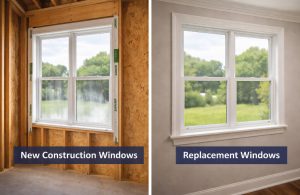
New construction windows have a nailing fin. That’s a thin flange — usually aluminum — running around the entire perimeter of the window frame. It attaches directly to the rough framing before any exterior cladding goes on. Stucco, siding, brick — it all gets installed over that fin. The result is a tight, weatherproof seal between the window and the structure itself.
Replacement windows don’t have that fin. They’re built to slide into an existing frame that’s already in the wall. The outer frame stays. The old sash and glazing come out, the new window drops into the opening, and it gets secured from the inside. It’s a cleaner process when the original frame is still solid. We see this constantly on Orlando homes built in the 1980s and 1990s — the frames are fine, but the glass is single-pane and the seals have long since failed in the Florida heat.
Here’s what most guides get wrong: they treat this as a preference. It’s not. It’s a structural question. Install a replacement window into a rough opening without an existing frame, and you’ve got a gap problem. Water gets in. Insects get in. And in Central Florida, moisture damage moves fast.
There’s also a size difference worth understanding. Replacement windows are almost always slightly smaller than the rough opening they go into — by design, since they need to fit inside the existing frame. So if you’re comparing a new construction window and a replacement window listed at the same nominal size, the replacement unit will have a smaller glass area. For some homeowners, that’s a real tradeoff worth knowing before they commit.
New construction windows are the right call when:
- You’re building from scratch
- You’re doing an addition or bump-out
- The existing frame is rotted, warped, or structurally compromised
- You’re changing the window size or location in the wall
Replacement windows are the right call when:
- The existing frame is square, solid, and intact
- You want minimal disruption to interior trim and exterior finishes
- You’re updating glass performance without a full renovation
The condition of the existing frame is the single most important factor in choosing between these two window types. If you’re already noticing signs of frame wear or seal failure, it may be worth talking to a window replacement professional in Orlando before you commit to either option. A good installer will check the frame before recommending anything. If someone quotes you a replacement window without looking at your existing frame first, that’s a red flag.
Your Home’s Current Condition Determines Which Window Type Fits
The single biggest factor in choosing between new construction and replacement windows is what’s already there. Not your budget. Not your style preferences. The condition of your existing window frames and the surrounding wall structure decides everything.
Here’s what we look at on every job: the frame material, whether there’s rot or water damage, how the window is attached to the rough opening, and whether the nailing fin is still intact. Frames that are solid and square? Replacement windows drop right in. Soft, warped, or compromised? You’re likely looking at a full tear-out.
In Orlando, we see this constantly — homes built in the 1970s and 1980s with aluminum frames that have oxidized and pulled away from the stucco. The frame looks fine from the inside. But once you press on the corners, they flex. That’s a red flag. Replacement windows need a structurally sound host frame to seal and perform correctly. A bad frame means air and water get in no matter how good the new glass is.
Rot is the other issue. Florida’s humidity is relentless, and wood frames — especially in older homes near lakes or in low-lying neighborhoods — absorb moisture over years. One thing most guides get wrong: they treat “frame condition” as a pass/fail test. It’s not that clean. You can have three good frames and one bad one on the same wall. We’ve done jobs where we installed replacement windows in five openings and one new construction window in a sixth — because that corner took water damage from a failed roof flashing. The solution matches the problem, not a blanket rule.
Stucco homes add another layer of complexity. In Central Florida, most homes built after 1985 use stucco exteriors. New construction windows use a nailing fin that gets tucked behind the stucco and sealed. Replacement windows don’t use that fin — they slide inside the existing frame. If stucco has cracked around the window frame and water has been sitting there, you may need to open up the stucco to check the damage before deciding anything.
Brick homes are different again. Brick doesn’t rot, but the wood framing behind it can. And once you go into a brick opening with a new construction window, you’re cutting masonry. That’s a bigger project. Most brick homes in older Orlando neighborhoods do better with replacement windows as long as the frame is solid — it avoids disturbing the masonry entirely.
Age of the home matters too, but not in the way people assume. A 1960s home isn’t automatically a new construction candidate. We’ve seen homes from that era with original wood frames that are rock solid — dense old-growth pine that outlasted everything around it. And we’ve seen 2005 builds with builder-grade frames that failed in fifteen years. The year tells you where to look. The actual inspection tells you what to do.
If you’re not sure what condition your frames are in, that’s exactly the kind of check we do before recommending anything. You can get more detail on how we evaluate window openings on our main window installation and replacement page.
The Installation Process Looks Very Different for Each Window Type
This is where most homeowners get surprised. The window itself might look similar on the shelf, but how it gets put into your wall is a completely different job depending on which type you need. Choose the wrong one and you’re redoing work — or worse, finding out mid-project that your house isn’t set up for what you ordered.
New construction windows have a nail fin. That’s a flat flange wrapping around the outside edge of the frame. It gets nailed or screwed directly into the rough opening — the wooden framing inside your wall. From there, the exterior gets wrapped, sealed, and finished around it. The window becomes part of the wall structure itself.
Replacement windows don’t have that fin. They’re sized to slide into an existing frame that’s already in your wall. The old sash and hardware come out. The new window drops in, you seal it, trim it, and you’re done — without ever touching the siding or the stucco outside.
New construction installation: Remove all exterior cladding around the opening. Pull the old window out completely, including the frame. Set the new window into the rough opening. Nail the fin to the framing. Flash and seal the perimeter. Re-apply exterior cladding and interior trim.
Replacement window installation: Remove interior stops and the existing sash. Measure the rough opening carefully. Insert the new window unit into the existing frame. Shim and level it. Seal the gaps. Replace interior stops and trim.
The replacement process is cleaner and faster — usually a few hours per window for an experienced crew. New construction takes longer because you’re opening up the wall. In Florida, that means your home is exposed to humidity and potential rain while the work is happening. We always check the forecast before scheduling new construction installs. A surprise afternoon thunderstorm in August can set a job back by a full day.
One thing most guides get wrong: they say replacement windows are always the easier choice. That’s not always true. If your existing frame is rotted, warped, or out of square — which we see often in older Orlando homes near lakes or in neighborhoods with older drainage — a replacement window won’t seat right. You’ll get air leaks, condensation between the panes, and a window that doesn’t lock properly.
The framing condition of your existing opening matters more than most people realize. Before you buy anything, have someone check the frame for rot, squareness, and moisture damage. That one step saves a lot of headaches down the road. Our window replacement services page walks through exactly how we assess each opening before recommending anything.
Frequently Asked Questions
What is the main difference between new construction and replacement windows?
New construction windows have a thin flange — the nailing fin — around the frame that attaches directly to the rough framing. Replacement windows don’t have that fin. They slide into an existing frame that’s already in your wall. It’s not about style or preference. It’s about what’s already in your wall and whether that frame is still solid.
Can you use a new construction window in an existing home in Orlando?
You can, but it usually means tearing into your stucco or siding to expose the framing — and in Orlando, that opens the door to moisture problems fast. We’ve seen jobs where a contractor forced a new construction window into a retrofit opening, patched the stucco badly, and left water sitting behind the wall for years. If your existing frame is solid, a replacement window is almost always the better fit for an older Orlando home.
How does Orlando’s climate affect which window type you should choose?
Orlando’s heat and heavy rain season make the right window choice more urgent than in most places. Moisture damage moves fast here. If a window isn’t sealed correctly to the wall, water gets in before the next rainy season. Homes built in the 1970s through 1990s across the Orlando area are especially vulnerable because older aluminum frames oxidize and pull away from stucco over time.
Is it a mistake to choose a replacement window just because it seems easier?
Yes, if your existing frame is damaged. If the frame is soft, warped, or pulling away from the wall, a replacement window won’t seal correctly. You’d be locking a new window into a broken host. Always have someone check the frame condition before deciding — that’s the step that actually protects your home.
Do replacement windows give you less glass than new construction windows?
Yes, and it’s worth knowing before you commit. Replacement windows are built slightly smaller than the rough opening by design — they need to fit inside the existing frame. So even if a replacement and a new construction window share the same nominal size, the replacement unit will have a smaller glass area. That can affect how much natural light comes in and how the window performs for energy efficiency.
Are new construction windows required by Florida building code for new homes?
Florida building code requires windows in new construction to be properly anchored to the wall structure, which is what new construction windows with nailing fins are designed to do. Always confirm specific requirements with your local Orlando building department or a licensed contractor.
Ready to find out what your home needs? Call 407-830-7004 or visit all-americanexteriors.com to schedule your free estimate. We’ll check your frames, give you a straight answer, and make sure you’re ordering the right window before anything gets opened up.